Kick scooters aren't just for kids. Many Sydney commuters use one to cover the gap between home and the train station, ferry wharf or bus stop, or for short trips around the neighbourhood. A kick scooter is quiet, cheap to run and, unlike a privately owned e-scooter, legal on most NSW footpaths and shared paths. This guide covers what to consider.
This guide is general information written in our own words, based on the official sources listed at the end. It isn't legal or medical advice. Road rules and e-scooter trials change, and councils can put up local signs that override the general rules, so check the current rules with Transport for NSW and follow any signs where you ride. We don't review or recommend particular brands or shops.
Why a kick scooter?
For short trips, a kick scooter can be considerably faster than walking, and it folds small enough to carry. There's no battery to charge, no registration and little maintenance. It's also legal: Transport for NSW says foot scooters can be ridden on footpaths unless signs say otherwise, while the NSW Government says privately owned e-scooters are illegal on NSW roads and paths. See our e-scooter guide.
Wheel size
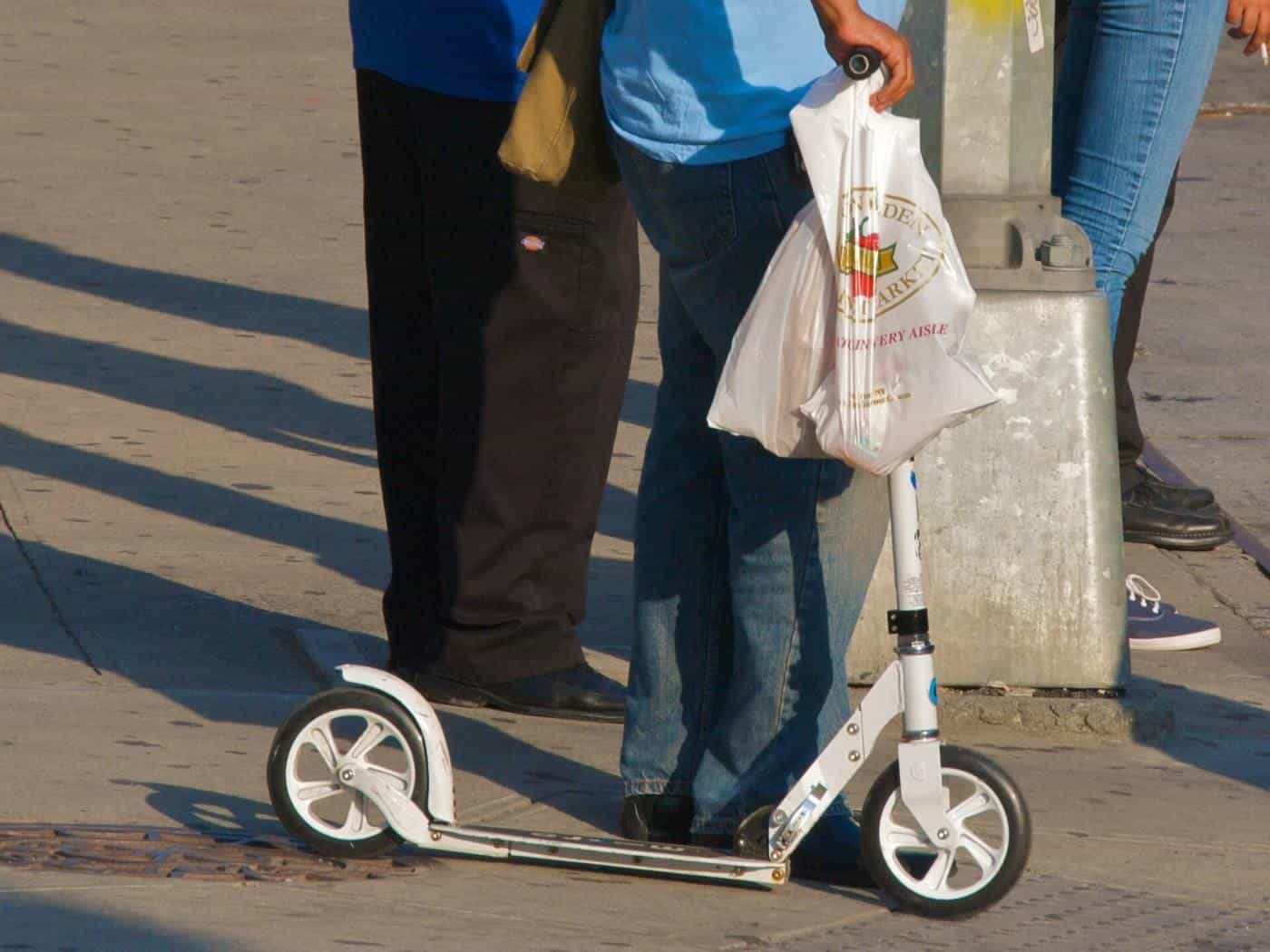
Wheel size is the biggest factor in comfort. Better Health Channel explains that small scooter wheels are easily stopped by rough surfaces such as cobblestones and large cracks, which makes losing control quite likely. Sydney's suburban footpaths have plenty of tree-root bumps, lifted pavers and kerb ramps. Larger wheels roll more smoothly and are more forgiving. Some adult scooters also have front suspension or air-filled tyres for extra comfort, at the cost of extra weight.
Folding and weight
If you'll carry your scooter on public transport, up stairs or into an office, folding and weight matter. Look for:
- a quick, secure folding mechanism with a secondary safety lock;
- a weight you can comfortably carry for a few minutes;
- a carry strap or handle;
- a folded size that fits under a desk or beside your seat.
Try folding and unfolding the scooter in the shop if you can.
Height and fit
The handlebars should sit roughly at hip to waist height. Check the adjustable range suits your height, and check the maximum rider weight. A wider deck is more comfortable for longer rides.
Brakes
Most kick scooters have a rear foot brake. Some adult models add a hand brake on the front wheel, which can make stopping easier and more controlled. Practise emergency stops before riding in busy areas.
Planning your route
Plan a route that stays legal and pleasant:
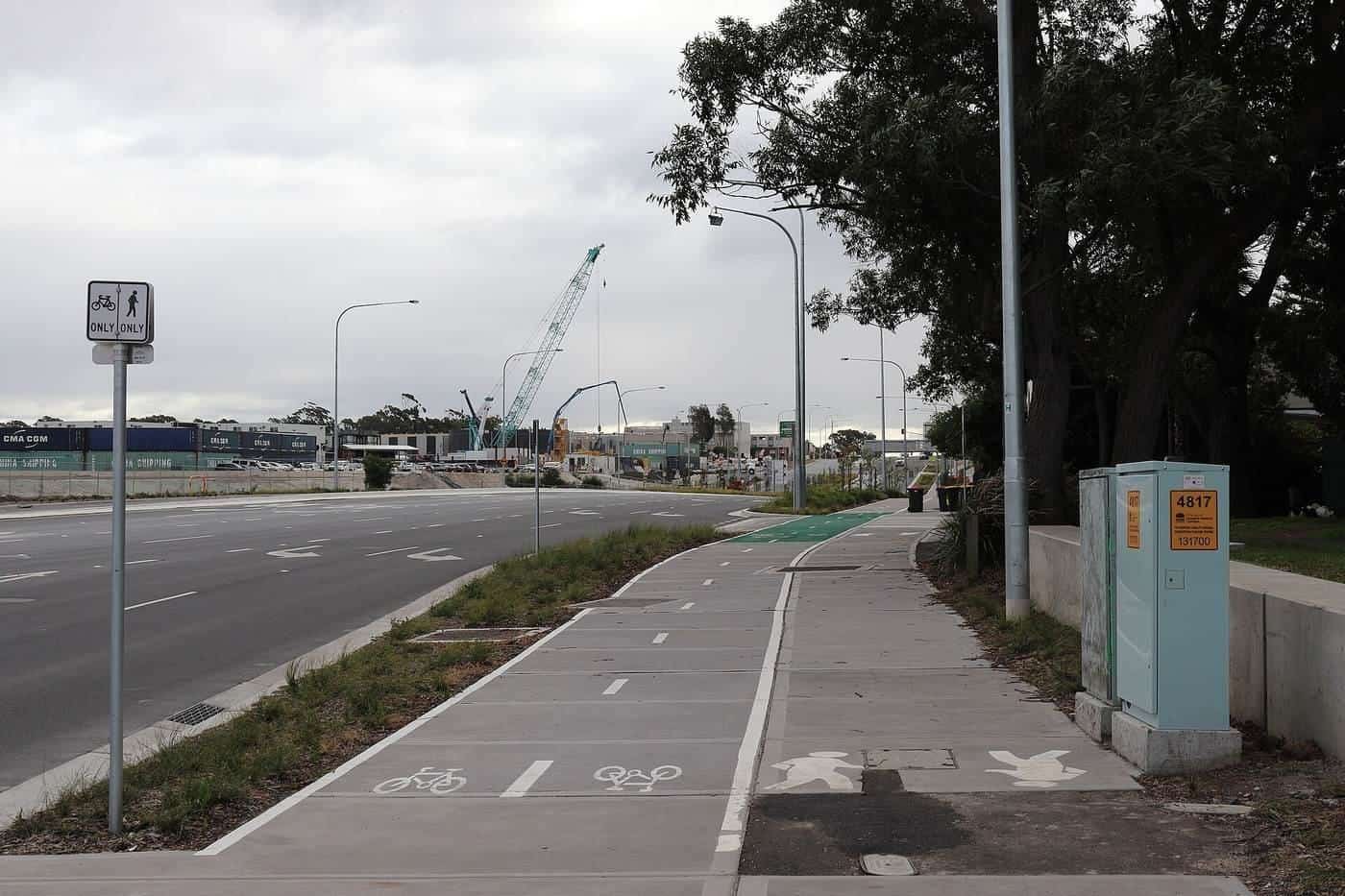
- Use footpaths and shared paths. Transport for NSW's Cycleway Finder can help you find shared paths and cycleways.
- Avoid roads where regulation 240 doesn't allow scooters, such as roads with a speed limit above 50 km/h or a dividing line, and never ride on roads at night.
- Look for routes with smooth surfaces and few steep hills.
- Allow time to walk through crowded areas, such as station entrances and shopping strips.
Public transport
Rules for carrying scooters and other wheeled devices on Sydney trains, metro, buses, light rail and ferries can vary and change. Check Transport for NSW's current rules before you travel. As a courtesy, fold your scooter, keep it clean and out of aisles and doorways, and avoid travelling with it at the busiest times if you can. Never ride in stations or on platforms.
Riding etiquette for commuters
Peak-hour footpaths can be crowded. Keep left, give way to pedestrians as regulation 242 requires, slow to walking pace near people, and walk when it's busy. See our path etiquette guide.
Weather
Small wheels lose grip on wet surfaces. In the rain, walk or choose another way to travel. Mudguards help keep spray off your clothes on damp days.
Security
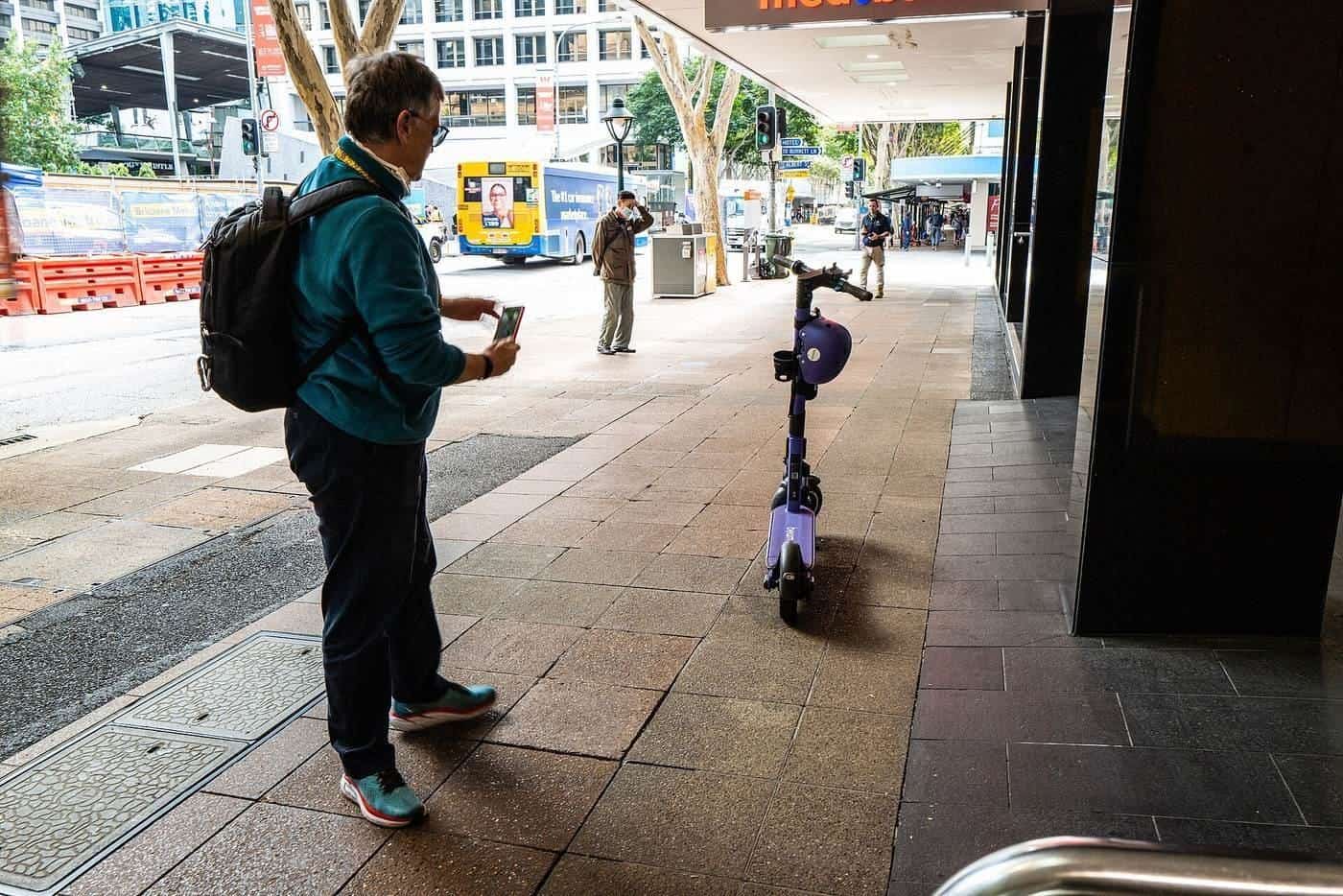
Kick scooters are easy to carry away. Bring it inside where possible, or use a lock where scooters are allowed to be locked. Note the serial number and keep a photo.
Gear
A helmet, bright clothing and, for low light, front and rear lights make commuting safer. Wrist guards are worth considering, as wrist fractures are common in scooter falls.
First week as a scooter commuter
Ride your route at a quiet time first, such as on a weekend. Practise folding, carrying and braking. Note where you'll need to walk, such as station entrances and busy crossings. Allow extra time for the first few trips. Check your scooter after each ride for anything loose. Within a week or two, the routine usually becomes second nature.
Kick scooter versus bicycle
A bicycle is faster over longer distances and handles hills better, but it's bulkier to carry and store. A kick scooter folds small, is easier to take on public transport and suits short trips. Many commuters use a scooter for the first and last part of a trip and public transport in between. The rules also differ: bicycles must follow bicycle road rules, and in NSW adults may ride on footpaths only in limited circumstances.
Try the "Where can I ride?" checker
Our free ride checker lets you choose a kick scooter, a private e-scooter or a shared e-scooter, then pick a place, such as a footpath, shared path or road, and the time of day. It shows what the general NSW rules say, with a link to the official source. It runs entirely in your browser, and nothing you choose is sent anywhere. It's a guide only: local signs and changes to the rules always take priority.
Where our information comes from
Factual statements in our guides are based on official and authoritative sources, including Transport for NSW, the NSW Road Rules 2014, the NSW Government's e-scooter pages, Fire and Rescue NSW, the ACCC's Product Safety Australia, the Better Health Channel and Raising Children Network. We link to each source at the end of the page and write everything in our own words. We don't invent statistics, fines or prices, and where official sources disagree or change, we say so.
Rules change
Road rules, fines and e-scooter trials change from time to time. The NSW Government has said it's exploring options to change the rules for e-scooters, and trial sites open and close. Councils can also add local signs that ban scooters in particular places. Before relying on any rule, check the current information from Transport for NSW and follow the signs where you ride.
Riding with others in mind
Footpaths and shared paths belong to everyone. Riding at a sensible speed, keeping left, giving way to pedestrians and walking when it's busy make scooters welcome on Sydney's paths. Every rider who rides considerately helps keep paths open to scooters, and makes it easier for children to keep scooting to school and the park.
A note for parents and carers
Children learn by watching adults. If you ride a scooter or bicycle, wear your helmet, keep left, slow down near people and walk across roads. Talk about the rules as you go. Transport for NSW's Safety on Wheels information for parents is a helpful starting point, and Raising Children Network has practical advice on bike, scooter and skateboard safety.
Corrections and feedback
We review our guides against their sources and show the date each page was last checked. If you notice something out of date or incorrect, such as a change to the road rules or e-scooter trials, please tell us through our contact page. We read every message and correct mistakes promptly.
About this site
Kick Scooter Sydney is an independent information site. We aren't a scooter shop, hire company, government agency or safety authority, and we don't sell, review or recommend particular brands or shops. Our guides are general information, not legal or medical advice.
Key points
- Kick scooters are legal on most NSW footpaths and paths; private e-scooters aren't.
- Larger wheels handle Sydney's rough footpaths better.
- Choose a secure fold, manageable weight and the right handlebar height.
- Plan routes on footpaths and shared paths; never on roads at night.
- Check current public transport rules before carrying a scooter.
Frequently asked questions
Can adults ride kick scooters on Sydney footpaths?
Yes. Transport for NSW says foot scooters can be ridden on footpaths unless signs say otherwise. Keep left and give way to pedestrians.
Is a kick scooter or e-scooter better for commuting?
Under current NSW rules, privately owned e-scooters can't be ridden on public roads or paths. A kick scooter is legal on most footpaths and shared paths.
Can I take a scooter on a train or bus?
Rules vary between operators and can change. Check Transport for NSW's current rules before you travel; a folded, clean scooter that doesn't block aisles is generally easiest.
What wheel size is best for adults?
Larger wheels roll more smoothly over cracks and rough paths. Better Health Channel notes small wheels make losing control on rough surfaces quite likely.
Sources and further reading
Facts on this page were checked against these primary and official sources. Conditions change — confirm before you travel or buy.
- Skateboards, scooters and rollerblades — Transport for NSW
- Road Rules 2014 (NSW) reg 242: keeping left and giving way on paths — NSW Legislation via AustLII
- Road Rules 2014 (NSW) reg 240: wheeled recreational devices and toys on roads — NSW Legislation via AustLII
- Scooters and child safety — Better Health Channel (Victorian Government)
- Where can I ride an e-scooter in NSW — NSW Government