Sydney's footpaths and shared paths are busy places. Walkers, runners, prams, wheelchairs, dogs, bicycles and scooters all share the same space, from the Bay Run to the coastal walks and suburban streets. The road rules set out the minimum: keep left and give way to pedestrians. Good manners go further. This guide covers practical etiquette that keeps everyone safe.
This guide is general information written in our own words, based on the official sources listed at the end. It isn't legal or medical advice. Road rules and e-scooter trials change, and councils can put up local signs that override the general rules, so check the current rules with Transport for NSW and follow any signs where you ride.
The two rules that matter most
Regulation 242 of the NSW Road Rules 2014 requires a person on a wheeled recreational device, such as a kick scooter, on a footpath or shared path to:
- keep to the left of the path, unless it's impracticable; and
- give way to any pedestrian on the path.
Everything else in this guide builds on those two rules. Pedestrians have priority, and it's your job, as the faster and less predictable user, to slow down and make room.
Speed
There's no single speed limit for kick scooters on footpaths, but giving way to pedestrians means riding at a speed where you can stop safely. Near people, that often means walking pace. On a wide, empty shared path you can go faster, but slow down well before you reach other users, blind corners, gates, café seating and playgrounds. Downhill stretches are where scooters pick up the most speed, so control your speed early.
Passing
When you need to pass someone:
- Slow down as you approach.
- Let them know you're there, with a bell or a friendly "passing on your right".
- Give them time to react. Some people are hard of hearing, wearing headphones, or have young children or dogs that may move unpredictably.
- Pass on their right with as much space as you can.
- Don't cut back in front of them too soon.
If there isn't room to pass safely, wait. A few seconds behind someone costs nothing.
Bells and calling out
A bell is a polite way to let people know you're coming, and Raising Children Network includes a bell in its checklist of scooter safety features. Ring early and gently, not right behind someone. A spoken "hello" or "excuse me" often works better, especially for people who are startled by bells.
Riding in a group
Families and friends often scoot together. On a footpath or shared path, ride in single file when there are other people around, and keep to the left. Leave gaps so others can pass. On the road, regulation 241 says you must not ride alongside more than one other vehicle or device.
Children
Young children on scooters can be fast and unpredictable. If you're supervising, stay close enough to help, teach them to stop at driveways and kerbs, and remind them to keep left and slow down near people. See our kids and scooters guide.
Dogs
Many shared paths are popular with dog walkers. Slow right down near dogs, give leads a wide berth and never pass between a dog and its owner. Riding a scooter while walking a dog is risky for both of you, as a sudden pull can cause a fall.
Separated paths and cycleways
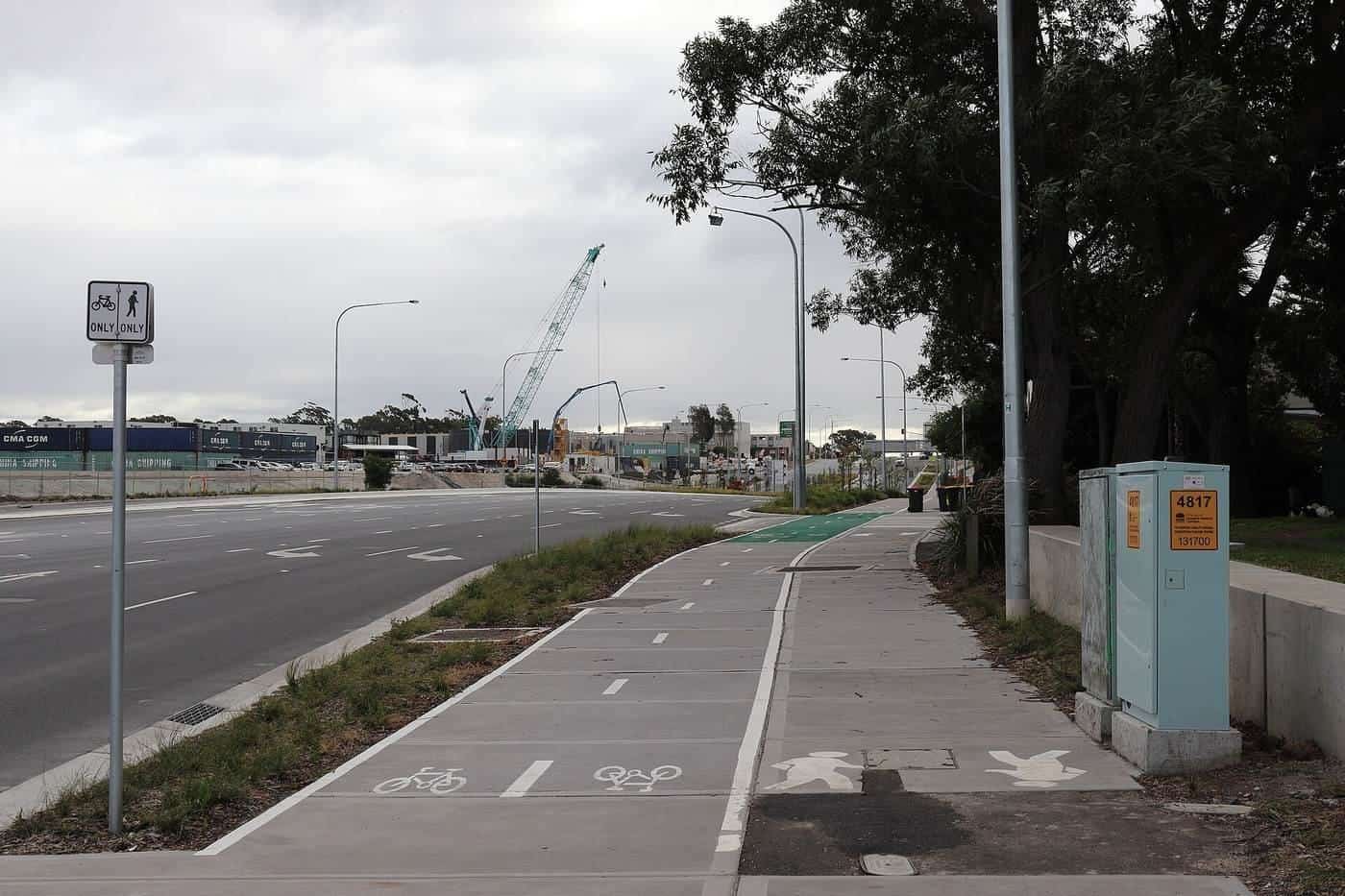
On a separated path, Transport for NSW says to ride on the bicycle side and keep out of the way of bike riders. Keep left, ride predictably, check behind before moving out and don't stop in the middle of the path. If you need to stop, pull off to the side.
Headphones and phones
Listening to music or looking at your phone while riding makes it harder to hear bells, warnings and traffic, and harder to react. Keep your attention on the path.
Parking and carrying your scooter
When you stop, fold your scooter or park it where it doesn't block footpaths, doorways, kerb ramps, bus stops or tactile paving used by people who are blind or have low vision. For shared e-scooters in trial areas, the NSW Government asks riders to park thoughtfully and use marked bays where provided. The same courtesy applies to kick scooters.
When to walk
Walk your scooter:
- through crowded areas, markets and events;
- where signs ban scooters;
- across busy crossings;
- in shopping centres and stations;
- whenever you can't ride without forcing pedestrians to move.
Walking is always allowed, and it's often the most considerate choice.
Popular paths and peak times
Sydney's best-loved walks and foreshore paths are busiest on weekend mornings, sunny afternoons and public holidays. If you want to ride faster or practise, go at quieter times or choose a wider shared path. At busy times, expect to ride slowly and walk sections. Some popular coastal walks are narrow, with stairs and steep sections where riding isn't practical or allowed, so check signs before you go.
People with disability and older pedestrians
Some people who use footpaths can't move quickly out of the way, can't see or hear you coming, or may be unsteady on their feet. Give people using wheelchairs, walking frames, canes and guide dogs plenty of room and time, and never ride on tactile paving at crossings. A quiet, early "hello" is often better than a bell.
Try the "Where can I ride?" checker
Our free ride checker lets you choose a kick scooter, a private e-scooter or a shared e-scooter, then pick a place, such as a footpath, shared path or road, and the time of day. It shows what the general NSW rules say, with a link to the official source. It runs entirely in your browser, and nothing you choose is sent anywhere. It's a guide only: local signs and changes to the rules always take priority.
Where our information comes from
Factual statements in our guides are based on official and authoritative sources, including Transport for NSW, the NSW Road Rules 2014, the NSW Government's e-scooter pages, Fire and Rescue NSW, the ACCC's Product Safety Australia, the Better Health Channel and Raising Children Network. We link to each source at the end of the page and write everything in our own words. We don't invent statistics, fines or prices, and where official sources disagree or change, we say so.
Rules change
Road rules, fines and e-scooter trials change from time to time. The NSW Government has said it's exploring options to change the rules for e-scooters, and trial sites open and close. Councils can also add local signs that ban scooters in particular places. Before relying on any rule, check the current information from Transport for NSW and follow the signs where you ride.
Riding with others in mind
Footpaths and shared paths belong to everyone. Riding at a sensible speed, keeping left, giving way to pedestrians and walking when it's busy make scooters welcome on Sydney's paths. Every rider who rides considerately helps keep paths open to scooters, and makes it easier for children to keep scooting to school and the park.
A note for parents and carers
Children learn by watching adults. If you ride a scooter or bicycle, wear your helmet, keep left, slow down near people and walk across roads. Talk about the rules as you go. Transport for NSW's Safety on Wheels information for parents is a helpful starting point, and Raising Children Network has practical advice on bike, scooter and skateboard safety.
Key points
- Keep left and give way to pedestrians on footpaths and shared paths.
- Ride at a speed where you can stop safely; near people that often means walking pace.
- Warn people early with a bell or friendly call and pass on their right with space.
- Ride single file when paths are busy, and never more than two abreast on the road.
- Park scooters so they don't block footpaths, ramps or tactile paving.
Frequently asked questions
Do I have to give way to pedestrians on a scooter?
Yes. Regulation 242 of the NSW Road Rules 2014 requires you to keep left and give way to pedestrians on footpaths and shared paths.
How should I pass someone on a path?
Slow down, let them know you're there with a bell or a friendly call, and pass on their right with plenty of space.
Do kick scooters need a bell?
A bell is recommended so you can warn pedestrians, and Raising Children Network lists a bell in its scooter safety checklist.
Where should I leave my scooter?
Fold or park it where it doesn't block footpaths, doorways, ramps or tactile paving.
Sources and further reading
Facts on this page were checked against these primary and official sources. Conditions change — confirm before you travel or buy.
- Road Rules 2014 (NSW) reg 242: keeping left and giving way on paths — NSW Legislation via AustLII
- Skateboards, scooters and rollerblades — Transport for NSW
- Bike, scooter and skateboard safety — Raising Children Network
- About riding shared e-bikes and e-scooters — NSW Government