Kick scooters are everywhere in Sydney: children riding to school, commuters folding a scooter onto a train, and families rolling along harbour foreshore paths on a Sunday. Because a kick scooter has no motor, NSW road rules treat it as a "wheeled recreational device", in the same family as skateboards and rollerblades. That shapes where you can ride. This guide explains the general rules for footpaths, shared paths, separated paths and roads.
This guide is general information written in our own words, based on the official sources listed at the end. It isn't legal or medical advice. Road rules and e-scooter trials change, and councils can put up local signs that override the general rules, so check the current rules with Transport for NSW and follow any signs where you ride.
What counts as a kick scooter
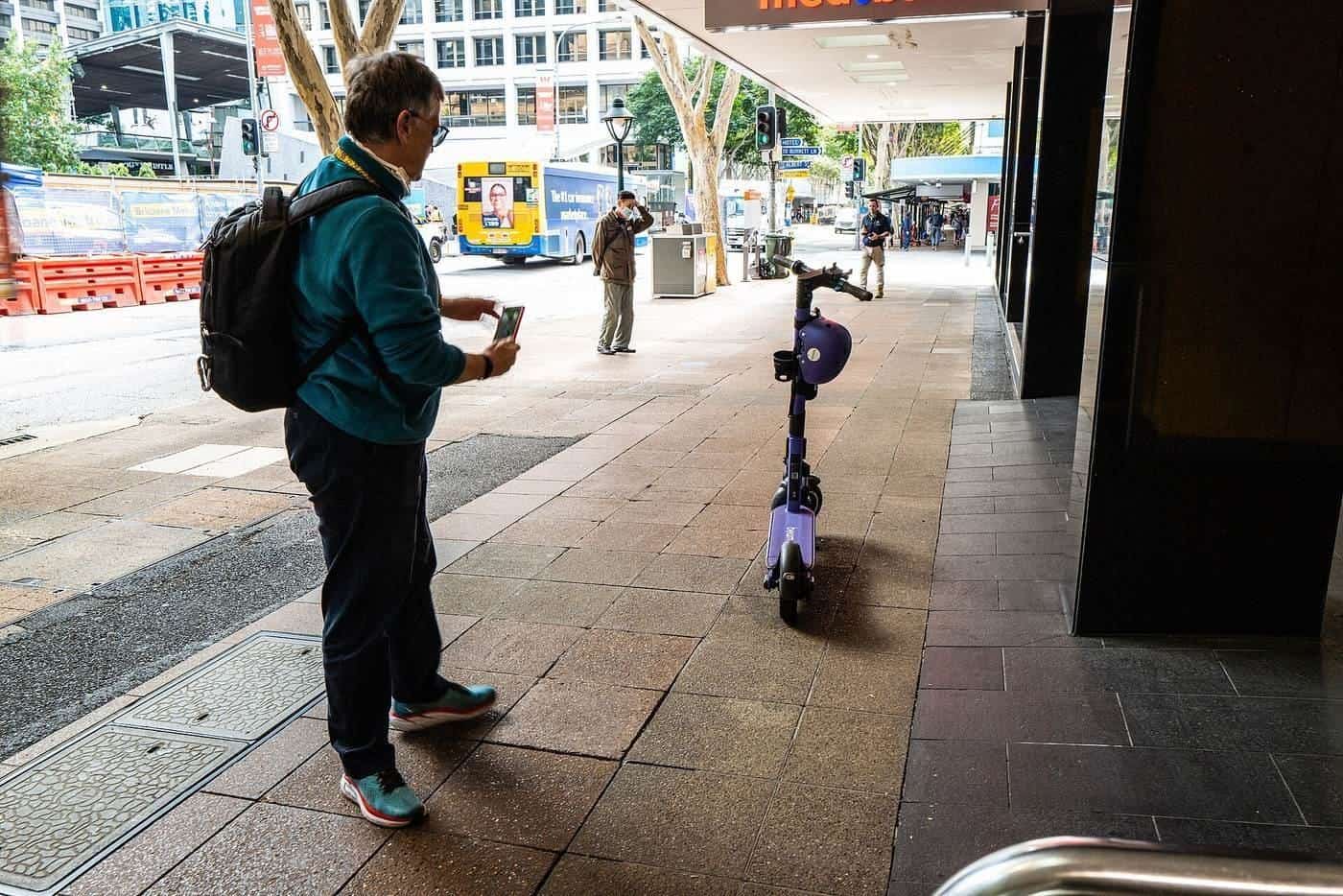
A kick scooter (also called a foot scooter, push scooter or footbike) is moved by human power alone: you stand on the deck and push off the ground with one foot. The NSW road rules group these with skateboards, rollerblades and roller skates as wheeled recreational devices. A scooter with an electric motor is different. E-scooters are covered by separate rules, and privately owned e-scooters can't legally be ridden on NSW roads or paths. See our e-scooter guide.
Footpaths
Transport for NSW says you can ride a foot scooter on a footpath unless there is a sign telling you not to. That makes the footpath the default place to ride in most Sydney streets. Two rules apply:
- Keep left. Regulation 242 of the Road Rules 2014 requires a person using a wheeled recreational device on a footpath or shared path to keep to the left of the path, unless it's impracticable to do so.
- Give way to pedestrians. The same regulation requires you to give way to any pedestrian on the path.
In practice, giving way means slowing down, leaving plenty of room and being ready to stop. A pedestrian doesn't have to step aside for you. Footpaths outside shops, schools, train stations and bus stops are often crowded, and people step out of doorways without looking. Walking your scooter through crowded stretches is often the simplest option.
No-scooting signs
Councils and other land managers can put up signs that ban scooters, skateboards and similar devices in certain areas, such as busy town centres, malls, plazas and some parks. The usual sign shows a scooter or skateboard inside a red circle with a diagonal bar. If you see one, get off and walk. Signs override the general rule that footpaths are open to scooters, so it's worth keeping an eye out, especially in places you haven't ridden before.
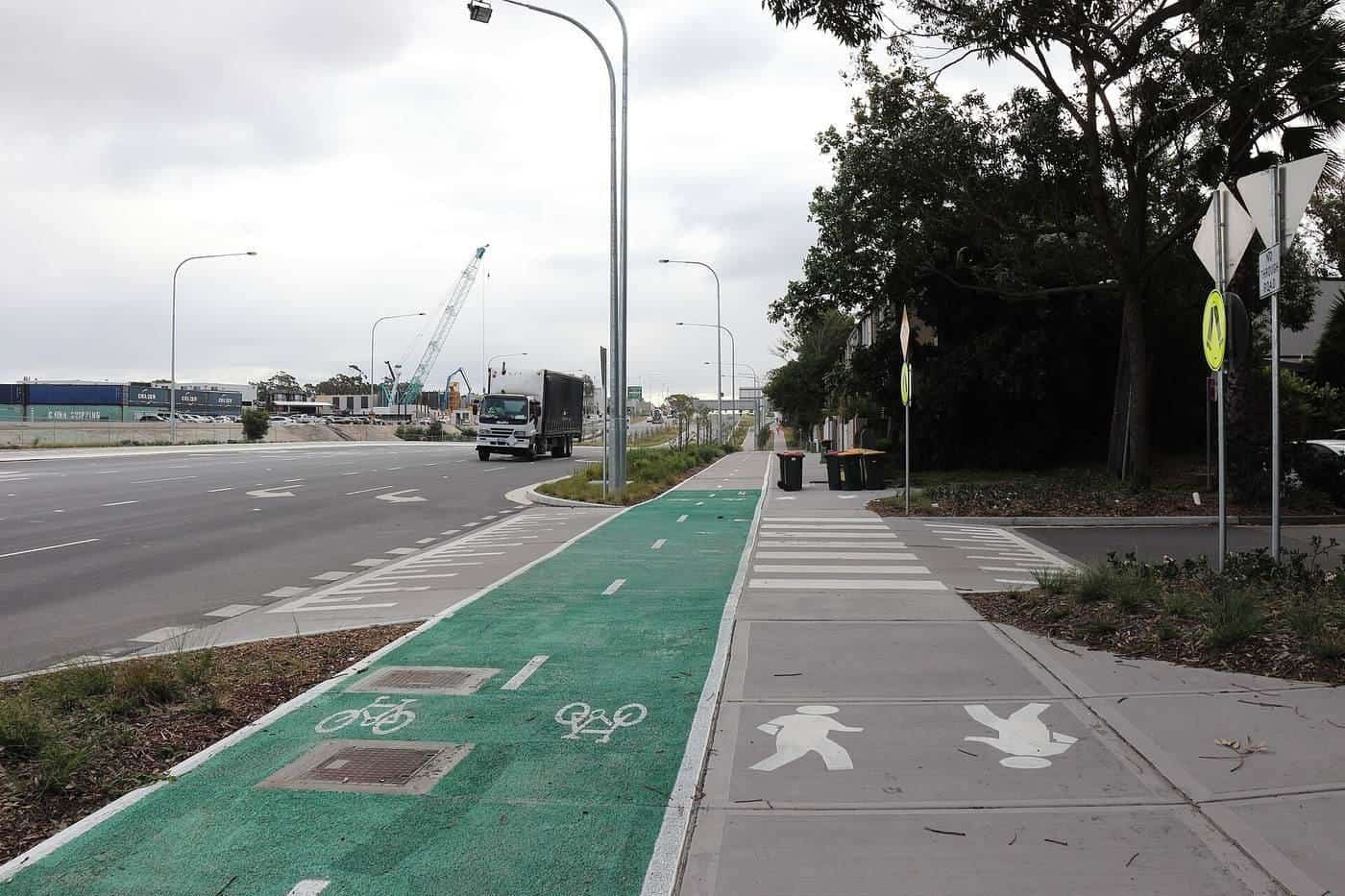
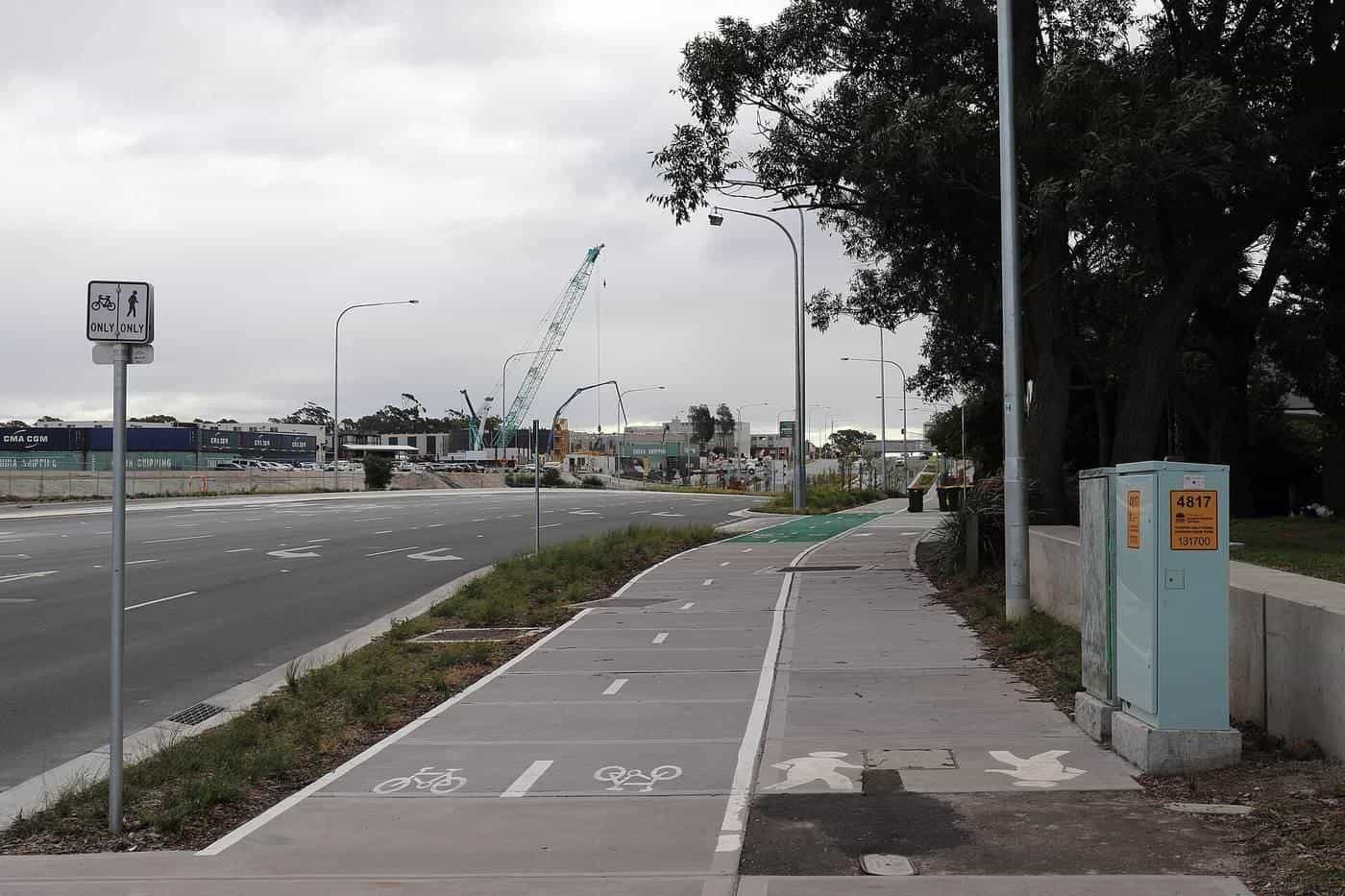
Shared paths
A shared path is a path marked with signs or pavement symbols showing a pedestrian and a bicycle. Many of Sydney's foreshore walks, parkland loops and paths beside motorways are shared paths. You can ride a kick scooter on a shared path, and the keep-left and give-way rules in regulation 242 apply in the same way as on a footpath. Bicycle riders also use shared paths, often at higher speeds, so ride predictably, keep left and avoid stopping suddenly in the middle of the path.
Separated paths
A separated path has one side for pedestrians and another for bicycles, usually shown with a painted line and symbols, or with different surfaces. Transport for NSW says that on a separated path you should use the side for bicycles and keep out of the way of bike riders. Don't weave between the two sides, and pull over to the left edge if faster riders are coming through.
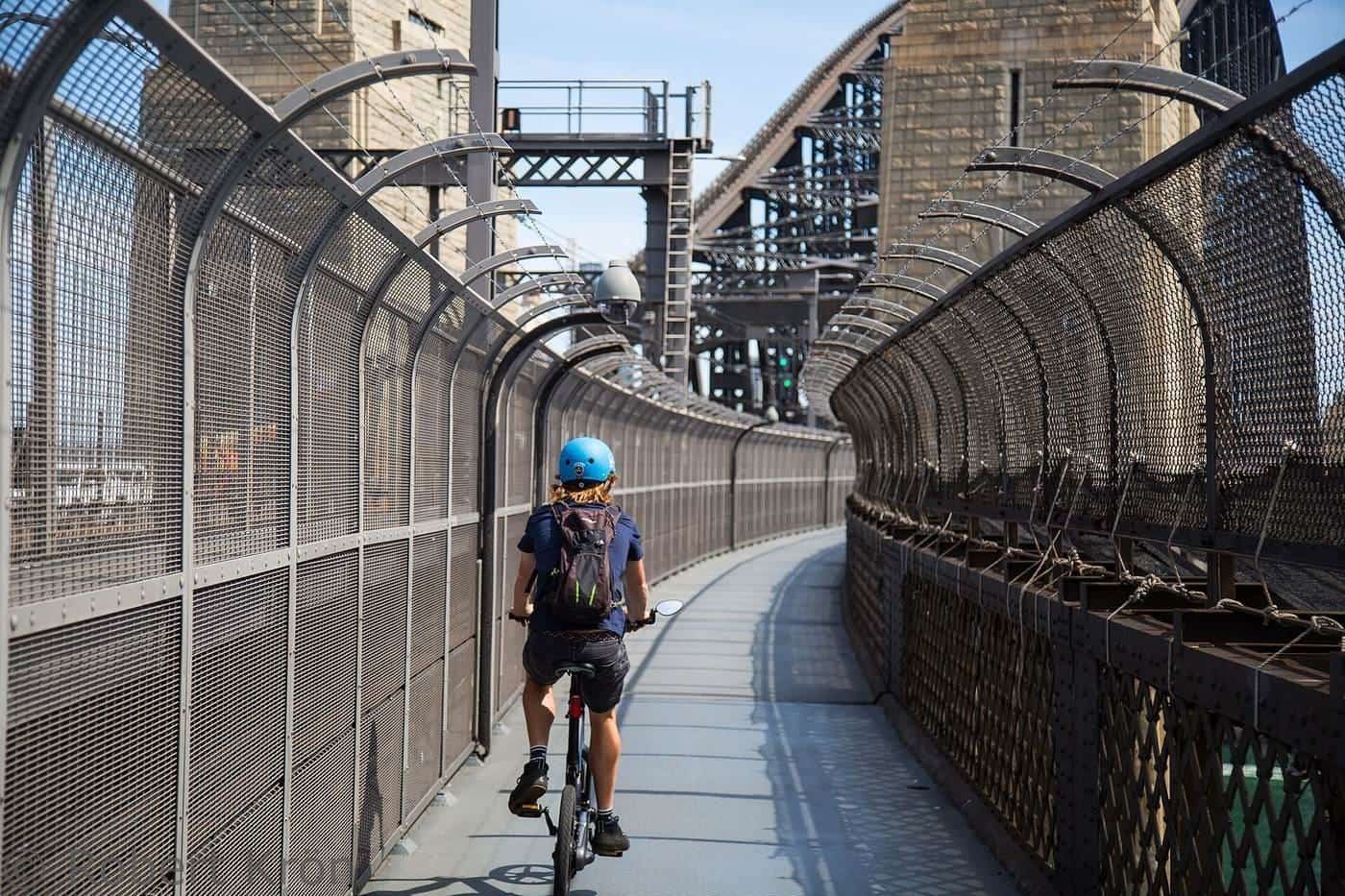
Bicycle paths and bike lanes
Paths marked only with a bicycle symbol are for bicycles. Bike lanes painted on the road are part of the road, so the road rules apply there. If you're unsure whether a scooter is allowed somewhere, follow the signs, and when there are no signs, choose the footpath or shared path.
Roads
Kick scooters can be ridden on some roads, but the rules are strict. Regulation 240 says you must not ride a wheeled recreational device on a road at night, or on certain roads, including roads with a dividing line or median strip, roads with a speed limit above 50 km/h, and one-way roads with more than one marked lane. You can still cross a road by the shortest safe route. Even where riding on the road is legal, Transport for NSW doesn't recommend it for school-aged or younger children. Our road riding guide covers this in detail.
Pedestrian crossings and traffic lights
When you cross a road, take the shortest safe route and follow the signals at traffic lights. Many riders find it safest to get off and walk across a busy crossing, so they can move at the same pace as other pedestrians and avoid surprising turning drivers. Give way to pedestrians on the crossing and at kerb ramps.
Private property, parks and malls
Shopping centres, train stations, sports grounds, schools and some parks set their own rules. Many shopping centres don't allow scooters inside, and some parks limit scooters to particular paths or skate areas. Look for signs at entrances and follow staff directions.
Fines
Riding a scooter in the wrong place can lead to a fine. Regulation 242 lists a maximum penalty of 20 penalty units for breaking the keep-left and give-way rules on paths. Check the current penalty amounts with Transport for NSW or Revenue NSW, as fine amounts are updated from time to time. We don't publish fine amounts because they change.
A simple way to remember the rules
Think of a kick scooter as walking with wheels. You're allowed where pedestrians are allowed, unless a sign says no, and you must treat pedestrians as having priority. Keep left, keep your speed down near people, and when it's busy, walk.
Common situations
The footpath ends. If a footpath ends and the only option is a road with a dividing line or a speed limit above 50 km/h, get off and walk, or turn back. A shared path goes through a park with no-scooter signs. Follow the signs and walk that section. You reach a busy shopping strip. Walking is usually the safest and most considerate choice. You're unsure whether a path is shared. Look for the pedestrian-and-bicycle symbol; if it's a footpath, scooters are still allowed unless a sign says otherwise.
Visitors to Sydney
If you're visiting from another state or country, don't assume your home rules apply. In NSW, kick scooters can use footpaths unless signed otherwise, but privately owned e-scooters can't be ridden in public at all. Rules for helmets, roads and e-scooters vary between Australian states and territories, so check the NSW rules before you ride.
Try the "Where can I ride?" checker
Our free ride checker lets you choose a kick scooter, a private e-scooter or a shared e-scooter, then pick a place, such as a footpath, shared path or road, and the time of day. It shows what the general NSW rules say, with a link to the official source. It runs entirely in your browser, and nothing you choose is sent anywhere. It's a guide only: local signs and changes to the rules always take priority.
Where our information comes from
Factual statements in our guides are based on official and authoritative sources, including Transport for NSW, the NSW Road Rules 2014, the NSW Government's e-scooter pages, Fire and Rescue NSW, the ACCC's Product Safety Australia, the Better Health Channel and Raising Children Network. We link to each source at the end of the page and write everything in our own words. We don't invent statistics, fines or prices, and where official sources disagree or change, we say so.
Key points
- A kick scooter is a wheeled recreational device under the NSW road rules.
- You can ride on footpaths unless a sign says otherwise; keep left and give way to pedestrians.
- On shared paths, keep left and give way; on separated paths, use the bicycle side and keep out of the way of bike riders.
- Road riding is limited: never at night, and not on roads with a dividing line, median strip, limit above 50 km/h or multi-lane one-way traffic.
- Private e-scooters are not allowed on NSW roads or paths.
Frequently asked questions
Can I ride a kick scooter on the footpath in NSW?
Yes. Transport for NSW says you can ride a foot scooter on footpaths unless signs say otherwise. You must keep left and give way to pedestrians.
Can I ride a kick scooter on a shared path?
Yes. Keep left and give way to pedestrians. On a separated path, Transport for NSW says to use the side for bicycles and keep out of the way of bike riders.
Can I ride a kick scooter on the road?
Only in limited situations. You can't ride on a road at night, or on a road with a dividing line or median strip, a speed limit above 50 km/h or a one-way road with more than one marked lane. See our road riding guide.
Do the same rules apply to e-scooters?
No. Privately owned e-scooters are illegal on NSW roads and paths. Shared e-scooters in trial areas have their own rules, including no footpath riding.
Sources and further reading
Facts on this page were checked against these primary and official sources. Conditions change — confirm before you travel or buy.
- Skateboards, scooters and rollerblades — Transport for NSW
- Road Rules 2014 (NSW) reg 242: keeping left and giving way on paths — NSW Legislation via AustLII
- Road Rules 2014 (NSW) reg 240: wheeled recreational devices and toys on roads — NSW Legislation via AustLII
- Road Rules 2014 (NSW) reg 241: keeping left on roads — NSW Legislation via AustLII