Scooters are one of the most popular ways for Sydney children to get to school, the park and the shops. They're fun, build balance and confidence, and get kids outside. They also cause plenty of grazed knees, and sometimes more serious injuries. This guide brings together advice for parents from Transport for NSW, the Better Health Channel and Raising Children Network.
This guide is general information written in our own words, based on the official sources listed at the end. It isn't legal or medical advice. Road rules and e-scooter trials change, and councils can put up local signs that override the general rules, so check the current rules with Transport for NSW and follow any signs where you ride.
Age and readiness
There's no legal minimum age for riding a kick scooter in NSW. However, Better Health Channel says that, according to child safety experts, a scooter is an inappropriate toy for any child under eight, partly because scooters can travel at fast speeds. It also notes that young children and those learning to ride are most at risk of injury. Many younger children do ride scooters, especially three-wheeled designs; if yours does, close supervision and safety gear are essential.
Readiness is about more than age. Consider whether your child can balance, steer, stop on command, follow instructions and understand basic safety rules, such as stopping at driveways and kerbs.
Supervision
Better Health Channel advises parents to supervise their children when they're riding and to warn them of the potential dangers. Transport for NSW's Safety on Wheels information for parents encourages adults to supervise young riders and choose safe places to ride away from traffic. Stay close enough to step in, especially near driveways, roads and slopes.
Where kids should ride
Better Health Channel recommends providing a safe learning area while a child masters riding, such as a flat, smooth, enclosed space away from roads. It advises never allowing a young child to ride near the road, and not allowing an older child near the road until they're proficient. Transport for NSW says riding on the road isn't recommended for school-aged or younger children, even where it's legal.
Good places to learn include quiet paved areas in parks, empty basketball courts and school playgrounds out of hours (where permitted). Avoid hills, gravel, wet surfaces and busy footpaths until your child has good control.
Teaching the rules
Teach children the same rules adults follow on footpaths and shared paths:
- keep left;
- give way to people walking;
- slow down near people, dogs and corners;
- stop and look at every driveway, kerb and road;
- get off and walk across roads, holding an adult's hand if young;
- never ride on the road without an adult's permission.
Make sure your child understands and follows the road rules, as Better Health Channel advises. Practise together and praise good habits.
Safety gear
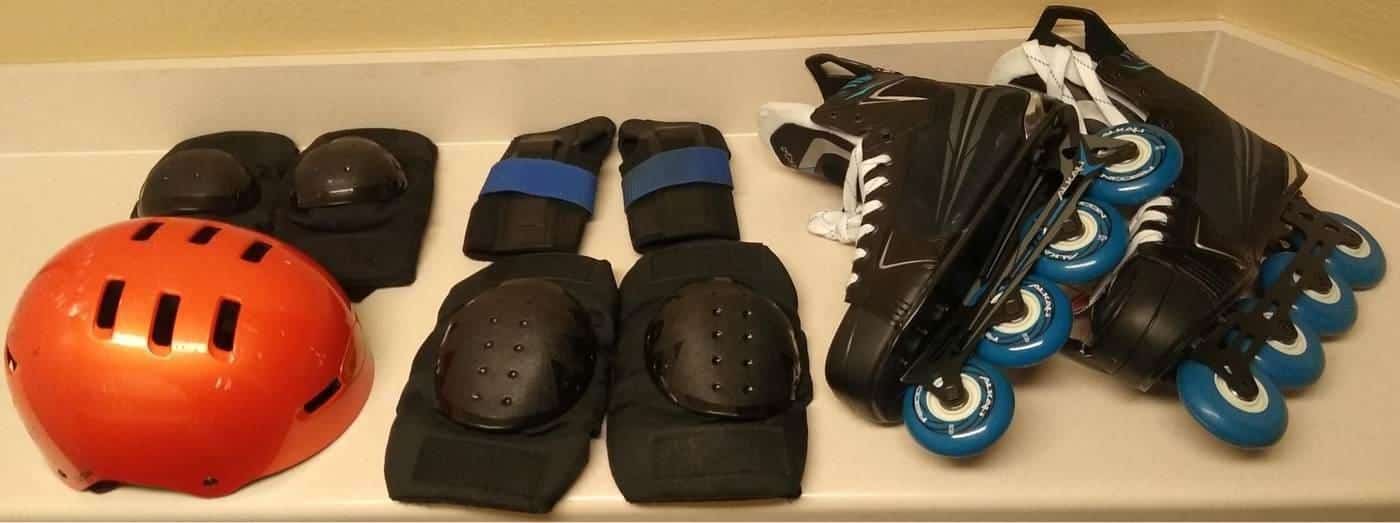
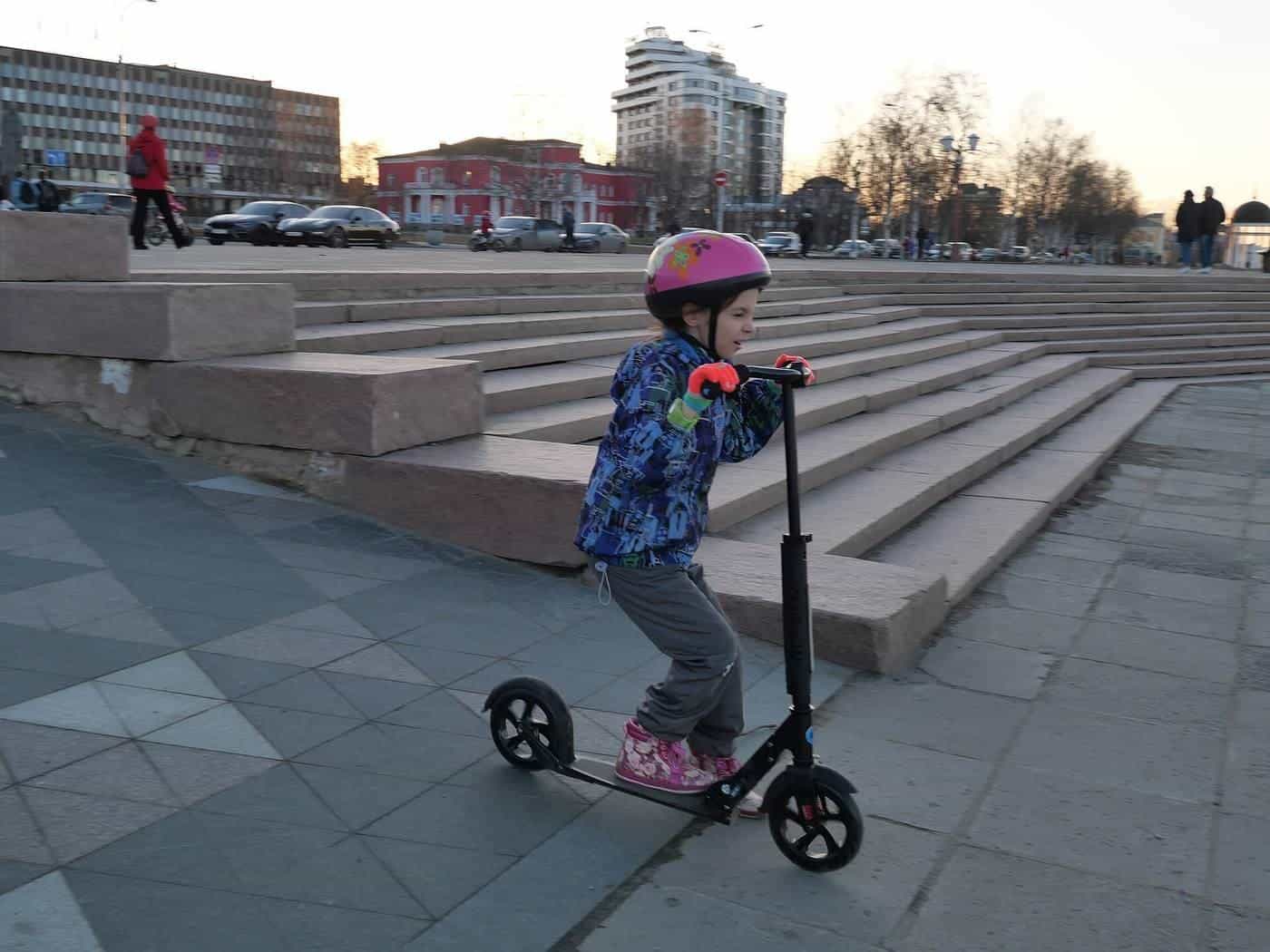
Better Health Channel says to make sure children wear their safety equipment every time they ride, even in the backyard. That means a properly fitted bicycle helmet plus wrist, elbow and knee guards, closed shoes and bright clothing. See our guides to helmets and protective gear.
Choosing a scooter for a child
Better Health Channel warns that cheaper scooters may have dangerous design flaws, such as flimsy folding mechanisms or sharp edges, and advises choosing a design that matches your child's weight, motor skills and physical development. It also notes that there's currently no Australian Standard for kick scooters. Raising Children Network suggests checking that a scooter has working brakes, no sharp edges, a handlebar column that locks into place, handle grips and an anti-skid deck. See our guide to choosing a kick scooter.
Scooting to school
Many schools welcome scooters, but some have rules about riding in the grounds and where scooters are stored. Check with your school. Practise the route together first, choosing quiet streets, footpaths and shared paths, and identify safe crossing points. Teach your child to get off and walk across roads and through the school gate area, which is often crowded at drop-off and pick-up times.
Night and wet weather
Raising Children Network advises that children shouldn't scoot at night. Kick scooters can't be ridden on NSW roads at night under regulation 240. Wet surfaces, leaves and painted lines can be slippery, and small scooter wheels lose grip easily, so it's best to walk in the rain.
When things go wrong
Most falls cause only grazes and bruises, but some cause fractures or head injuries. See our guide to falls and injuries for when to get medical help. In an emergency, call Triple Zero (000).
A simple learning plan
Start on a flat, smooth, enclosed area. Practise pushing, gliding, steering and braking until your child can stop on command. Next, practise on a quiet footpath, stopping at every driveway. Then try gentle slopes, controlling speed with the brake. Only move to busier paths when your child can ride confidently, keep left and stop reliably. Keep sessions short and fun.
Talking about hazards
Talk with your child about the hazards they'll meet: cars reversing from driveways, cracks and bumps, wet surfaces, dogs, people walking and steep hills. Ask them what they would do in each situation. Better Health Channel advises warning children of the potential dangers. Children who understand why a rule exists are more likely to follow it.
Try the "Where can I ride?" checker
Our free ride checker lets you choose a kick scooter, a private e-scooter or a shared e-scooter, then pick a place, such as a footpath, shared path or road, and the time of day. It shows what the general NSW rules say, with a link to the official source. It runs entirely in your browser, and nothing you choose is sent anywhere. It's a guide only: local signs and changes to the rules always take priority.
Where our information comes from
Factual statements in our guides are based on official and authoritative sources, including Transport for NSW, the NSW Road Rules 2014, the NSW Government's e-scooter pages, Fire and Rescue NSW, the ACCC's Product Safety Australia, the Better Health Channel and Raising Children Network. We link to each source at the end of the page and write everything in our own words. We don't invent statistics, fines or prices, and where official sources disagree or change, we say so.
Rules change
Road rules, fines and e-scooter trials change from time to time. The NSW Government has said it's exploring options to change the rules for e-scooters, and trial sites open and close. Councils can also add local signs that ban scooters in particular places. Before relying on any rule, check the current information from Transport for NSW and follow the signs where you ride.
Riding with others in mind
Footpaths and shared paths belong to everyone. Riding at a sensible speed, keeping left, giving way to pedestrians and walking when it's busy make scooters welcome on Sydney's paths. Every rider who rides considerately helps keep paths open to scooters, and makes it easier for children to keep scooting to school and the park.
A note for parents and carers
Children learn by watching adults. If you ride a scooter or bicycle, wear your helmet, keep left, slow down near people and walk across roads. Talk about the rules as you go. Transport for NSW's Safety on Wheels information for parents is a helpful starting point, and Raising Children Network has practical advice on bike, scooter and skateboard safety.
Corrections and feedback
We review our guides against their sources and show the date each page was last checked. If you notice something out of date or incorrect, such as a change to the road rules or e-scooter trials, please tell us through our contact page. We read every message and correct mistakes promptly.
Key points
- No legal minimum age, but experts say scooters are unsuitable for under-eights.
- Supervise young riders and choose safe areas away from traffic.
- Road riding isn't recommended for school-aged or younger children.
- Helmet plus wrist, elbow and knee guards every ride, even in the backyard.
- Children shouldn't scoot at night or in the wet.
Frequently asked questions
What age can kids ride a scooter?
There's no legal minimum age for kick scooters in NSW. Better Health Channel says child safety experts regard scooters as inappropriate for children under eight, so supervise younger children closely.
Can kids ride scooters on the road?
Transport for NSW says riding on the road isn't recommended for school-aged or younger children, even where it's legal.
What gear should my child wear?
A properly fitted bicycle helmet, plus wrist, elbow and knee guards, closed shoes and bright clothing.
Should kids scoot at night?
No. Raising Children Network advises that children shouldn't scoot at night, and kick scooters can't be ridden on NSW roads at night.
Sources and further reading
Facts on this page were checked against these primary and official sources. Conditions change — confirm before you travel or buy.
- Skateboards, scooters and rollerblades — Transport for NSW
- Safety on wheels (parent information) — Transport for NSW
- Scooters and child safety — Better Health Channel (Victorian Government)
- Bike, scooter and skateboard safety — Raising Children Network